
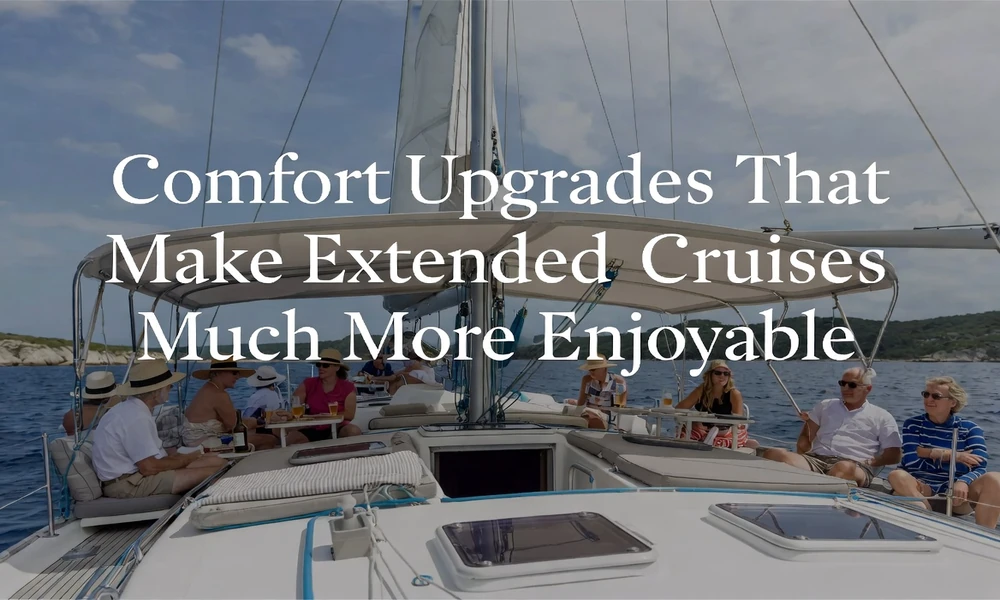
There’s a romantic image of cruising – gliding across turquoise water, anchoring in secluded bays, living the simple life at sea. And it’s real. But anyone who has spent weeks or months aboard will tell you a quieter truth: the difference between a dream cruise and a miserable one often comes down to comfort. Not luxury, exactly, but the everyday physical comfort that determines whether extended time aboard feels restorative or grinding.
When you’re out for a long weekend, you can tough out a hard seat or a bad night’s sleep. Over weeks and months, those small discomforts compound into fatigue, soreness, and frayed tempers. The cruisers who go the furthest and enjoy it most are almost always the ones who’ve invested in comfort. This guide covers the upgrades that make the biggest difference – the ones that turn an extended cruise from something you endure into something you savor.
Why Comfort Isn’t a Luxury on a Long Cruise
It’s tempting to dismiss comfort upgrades as indulgent – nice-to-haves for people who aren’t “real” sailors. That attitude fades fast on a long passage. Comfort on a cruising boat is directly tied to some very practical outcomes:
- Rest and alertness. A well-rested crew makes better decisions and handles emergencies better. Poor sleep is a genuine safety issue at sea.
- Physical health. Bad seating and sleeping arrangements cause real aches, back pain, and strain over time.
- Morale. Comfort keeps spirits up. Discomfort erodes the joy that made you go cruising in the first place – and tests relationships aboard.
- Endurance. Comfortable crew can keep going longer and enjoy more of the journey rather than counting the days until it ends.
Seen this way, comfort upgrades aren’t pampering – they’re investments in the success and enjoyment of the whole voyage.
Seating: Where You’ll Spend Most of Your Time
Here’s a truth that surprises new cruisers: you spend an astonishing amount of time sitting. Standing watch, steering, eating, relaxing, socializing, keeping an eye on the anchor – hour after hour, day after day, in the same seats. Which makes seating quite possibly the single highest-impact comfort upgrade on a cruising boat.
The problem is that a lot of factory boat seating is built to a price, not for long-term comfort. Thin cushions, poor support, and materials that bake in the sun or soak up water make extended sitting a genuine trial. Upgrading your seating pays dividends every single day you’re aboard.
What to look for in cruising seating
- Real support. Proper cushioning and ergonomic shaping that hold up over hours, not minutes.
- Marine-grade materials. UV-resistant, water-resistant, quick-drying, and mildew-resistant construction that survives the environment.
- Practical design. Seating that suits how you actually use the boat – helm seats, cockpit seating, and comfortable spots to relax at anchor.
- Durability. Quality that endures constant use and harsh conditions without falling apart mid-cruise.
- Because seating matters so much and the options vary so widely, it’s worth researching before you buy. This
boat seats review is a helpful place to start – it compares options across comfort, durability, and value, so you can choose seating that genuinely improves daily life aboard rather than discovering its shortcomings a week into a passage.
Sleep: The Foundation of Everything Else
If seating is where you spend your days, your berth is where the whole voyage is quietly won or lost. Nothing degrades a cruise faster than chronic bad sleep, and boat berths are notorious for being too hard, too hot, too damp, or too short.
Upgrades that transform sleep aboard
- Better mattresses or toppers. A quality mattress or a good memory-foam topper over a hard bunk is life-changing on a long cruise.
- Proper ventilation. Fans, opening ports, and hatch scoops keep the cabin cool and cut the condensation that makes bedding clammy.
- Lee cloths. These keep you securely in your bunk when the boat heels or rolls at sea, so you actually sleep instead of bracing all night.
- Blackout and bug protection. Shades for light and screens for insects make a huge difference to sleep quality at anchor.
Prioritize sleep upgrades early. A well-rested crew experiences everything else about cruising more positively – it’s the foundation the whole trip is built on.
Shade and Sun Protection
The sun is relentless on the water, reflecting off the surface and beating down for hours. Without good shade, extended cruising becomes an exhausting endurance test and a real health risk. Creating comfortable shaded areas is one of the most appreciated upgrades aboard.
- Biminis and dodgers provide essential cockpit shade and shelter from spray.
- Sun awnings and shade sails extend cool, shaded space at anchor, transforming the deck into a livable area in hot climates.
- Side curtains and enclosures block low sun and add weather protection when you need it.
Good shade doesn’t just feel better – it protects your skin, keeps the boat cooler, and dramatically expands the space you can comfortably use during the hottest part of the day.
Climate Comfort: Staying Cool and Dry
Temperature and humidity have an outsized effect on how a cruise feels. A stifling, muggy cabin makes everything harder; a well-ventilated, comfortable one makes long stretches aboard genuinely pleasant.
- Airflow from good fans and well-placed vents is often more effective and far less power-hungry than air conditioning.
- Ventilation that keeps air moving prevents the damp, stuffy feeling that settles into closed boats.
- Insulation and shade reduce the heat load in the first place, keeping the interior livable without constant power draw.
In cooler climates the same logic applies in reverse – good heating and insulation extend your comfortable cruising season and make chilly nights cozy rather than grim.
The Galley and Small Daily Comforts
Some of the most powerful comfort upgrades are small ones that improve the rhythm of daily life. A comfortable, well-organized galley makes cooking a pleasure rather than a chore, which matters enormously when you’re preparing every meal aboard for months. Reliable refrigeration means cold drinks and fresh food. Good lighting – bright task lighting and soft ambient options – makes evenings warm and functional. Comfortable cushions and a few soft furnishings turn a utilitarian cabin into a home.
None of these are dramatic, but together they shape the texture of everyday life aboard. On a long cruise, the small daily comforts often matter more than the big-ticket items – you interact with them constantly, and each minor friction or pleasure repeats hundreds of times over a voyage. A galley where the knife is always sharp and the pot doesn’t slide, a reading light that’s actually bright enough, a cabin that feels welcoming at the end of a long day: these are the details that determine whether extended cruising feels like camping or like living. Investing a little in getting them right returns comfort every single day you’re aboard.
Reducing Noise and Motion
Two under-appreciated comfort factors can quietly wear a crew down over a long cruise: noise and motion. Both are constant, both are fatiguing, and both can be meaningfully reduced with the right attention.
Noise aboard comes from a hundred sources – halyards slapping the mast, items rattling in lockers, the engine droning, water slapping the hull, rigging humming in a blow. Individually each is minor; together, over days, they fray the nerves and wreck sleep. A few fixes make a real difference:
- Silence the rattles with non-slip liners and by wedging or padding anything that shifts in lockers.
- Tame the halyards by leading them away from the mast at anchor so they don’t slap all night.
- Soften the interior with soft furnishings that absorb sound rather than letting it echo around a hard cabin.
Motion is harder to eliminate, but you can manage it. Choosing well-protected anchorages, using a riding sail or bridle to reduce sailing around the anchor, and positioning sleeping and living areas toward the boat’s center of motion all help. A boat that rolls less and rattles less is a boat that everyone aboard enjoys more, even if they can’t always say exactly why.
Power and the Comforts It Enables
Nearly every modern comfort aboard – fans, refrigeration, lights, device charging, water pressure – depends on electrical power. On an extended cruise, a comfortable boat is very often a boat with a well-thought-out power system, because running out of energy means running out of the comforts that make daily life pleasant.
You don’t need to become an electrical engineer, but a few upgrades pay for themselves in comfort many times over:
- Solar panels quietly top up your batteries every sunny day, keeping the fridge cold and the fans running without noise or fuel.
- Adequate battery capacity means you’re not rationing power or listening to a generator run every evening.
- Efficient appliances and LED lighting stretch the power you have much further, so comfort doesn’t come at the cost of constant charging.
Reliable power removes a whole category of daily stress and quietly underpins almost every other comfort on this list. It’s not glamorous, but it’s the engine behind an enjoyable extended cruise.
Prioritizing Your Upgrades
You don’t have to do everything at once, and budgets are real. If you’re deciding where to start, a sensible order of priority for most cruisers looks like this:
- Sleep first – it underpins everything else.
- Seating next – you’ll feel the benefit every single day.
- Shade and sun protection – essential in warm climates and easy to appreciate.
- Climate and ventilation – for pleasant living in any conditions.
- Galley and daily comforts – the finishing touches that make the boat a home.
Work through them as time and budget allow, and each upgrade will noticeably raise your quality of life aboard.
Personal Comfort: The Little Things You Carry
Beyond the boat itself, some of the most effective comfort upgrades are surprisingly personal and inexpensive – the individual items that make your own daily experience aboard better. Cruisers who have been out a long time swear by a handful of these small luxuries.
- Quality foul-weather gear that actually keeps you dry and warm transforms rough days from miserable to manageable. Cheap gear that leaks is a false economy you’ll regret on the first cold night watch.
- Good sun protection – a proper hat, polarized sunglasses, and reef-safe sunscreen – keeps you comfortable and healthy through long sunny days on the water.
- Comfortable, practical footwear protects your feet and gives you confidence moving around the boat, which matters more than you’d think over months aboard.
- A personal comfort kit – your own pillow, a favorite blanket, earplugs, an eye mask – costs little and makes a boat feel like home.
These items are easy to overlook when you’re focused on big systems and expensive upgrades, but they punch far above their weight. Never underestimate how much a genuinely comfortable pillow or a jacket that keeps the rain out can improve your entire experience of cruising. Comfort, in the end, is built from both the big investments and these small, personal touches.
Final Thoughts: Comfort Is What Keeps You Cruising
The cruisers who last – who keep going season after season and genuinely love it – are rarely the ones who suffered the most. They’re the ones who made their boats comfortable enough to enjoy the life they dreamed of. Comfort isn’t the opposite of adventure; it’s what makes long adventures sustainable.
Invest thoughtfully in the upgrades that matter – good sleep, supportive seating, shade, ventilation, and the small daily comforts – and your extended cruises will transform from something you tough out into something you never want to end. That, after all, is the whole point.
Whether you’re looking to learn more about boating, buy a boat or yacht, rent a vessel for your next adventure, or find the right accessories for life on the water, US Nautics has you covered – with practical boating guides, boats and yachts for sale, and honest, hands-on reviews of the gear and accessories that matter most. It’s a genuinely useful resource to bookmark and keep coming back to as your time on the water grows.