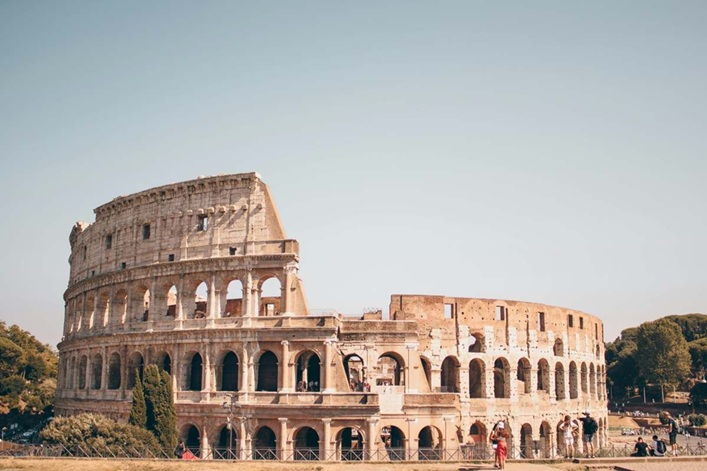
Rome is not a city that rewards urgency.
It resists compression, shortcuts, and tidy narratives. Everything here accumulates rather than aligns: centuries layered without concern for clarity, daily life unfolding inside history without ever stepping aside for it.
For travelers used to efficiency, this can feel disorienting at first. For those willing to adjust their rhythm, it becomes Rome’s greatest strength.
A short stay works best when expectations shift early. Not toward coverage, but toward presence. Rome offers density rather than distance. You move little, but absorb a lot. Streets curve instead of leading somewhere specific. Plans loosen. Time expands unevenly.
Mornings are the city’s most honest hours.
Before the traffic thickens, before voices overlap, Rome moves with intention. Cafés operate at standing height. Coffee is fast, unceremonious, and very good. Locals move decisively, keys already in hand, phones rarely checked. There is no sense of performance. Just habit.
Walking at this hour changes the relationship with the city. You notice scale. How quickly wide streets narrow. How often quiet appears without warning. Courtyards hidden behind doors that look resolutely closed until they aren’t.
What to see in Rome, for first-class travelers, is less about icons and more about timing. The Forum when the air is still cool. A church entered mid-morning, not for art but for shade. A market still functioning as a market, with prices shouted rather than written.
Museums require restraint.
One major visit is usually enough. More than that, and attention thins. Marble overwhelms. Frescoes blur. Rome does not reward accumulation. It rewards selectivity followed by pause.
That pause matters. A bench in a square. A glass of water without ice. A moment where nothing is being “done,” and yet the city keeps working quietly around you.
Food in Rome follows the same logic.
Lunch comes late. Tables are close. Conversations overlap. Dishes repeat themselves across menus because repetition is not a flaw here. It is confidence. Meals are less about discovery and more about confirmation: ordering what works, trusting what lasts.
Afternoons pull you indoors.
Libraries, small exhibitions, palazzi open without announcement. Thick walls, deep windows, rooms designed to temper noise and heat. These interiors reset the pace of the day. They also clarify what people often mean, imprecisely, by a luxury holiday in Rome. Not indulgence, but relief. Space where space matters. Quiet earned rather than curated.
Neighborhoods function as mood shifts rather than attractions.
Trastevere in the early evening, when routines outnumber visitors. Children on scooters, neighbors greeting each other across doorways.
Monti later, when streets hold sound and tables extend outward without ceremony.
Evenings do not build toward a climax.
Light softens. Stone releases warmth. Dinner stretches not because it is staged, but because there is no reason to hurry it along. Afterward, movement continues without direction. A square crossed twice. A wrong turn that improves the night.
What to do in Rome, then, becomes simple.
Walk without destination. Sit longer than intended. Return to the same place more than once. Allow repetition. Allow incompleteness.
First-class travel here is understated by nature.
No signals. No announcements. Just control over time, comfort embedded in routine, and the quiet privilege of not needing to extract meaning from every hour.
Leaving Rome rarely feels like closure.
More like interruption.
A sense of having briefly aligned with a rhythm that continues, entirely indifferent, once you’re gone.